

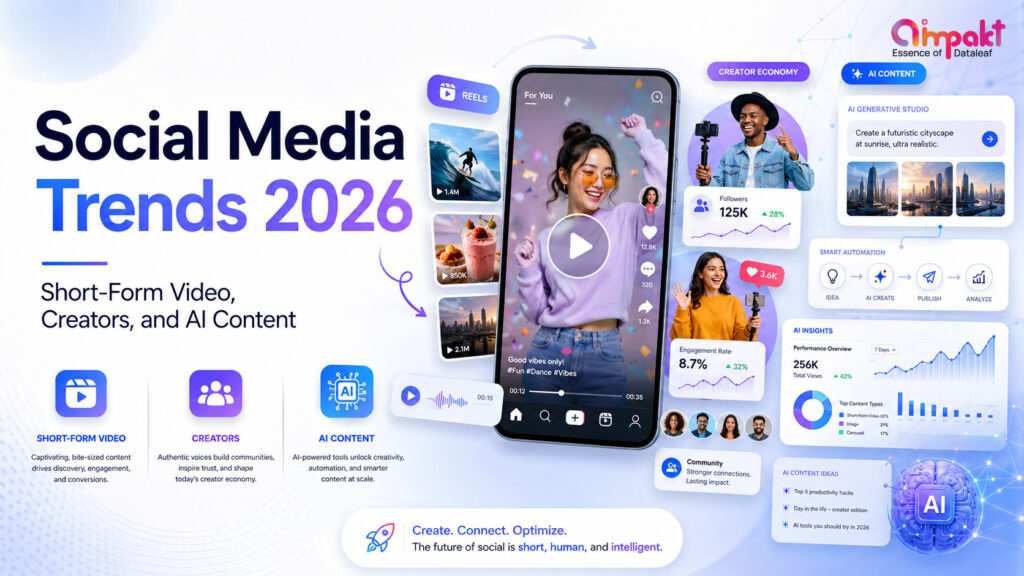
Social media marketing in 2026 is being shaped by short-form video, creator-led storytelling, AI-assisted production, social search, and original content. Brands that answer real questions and combine automation with human expertise are better positioned to build visibility, trust, and engagement.
What Are the Most Important Social Media Trends in 2026?
The leading social media trends in 2026 are short-form video marketing, long-term creator partnerships, responsible AI-generated content, and search-led discovery. Audiences increasingly expect useful, credible, and relevant content rather than conventional promotional posts.
TikTok’s 2026 trend forecast describes a shift from passive consumption toward curiosity, culturally relevant conversations, community participation, and emotional value. Content must therefore give people a reason to learn, respond, save, share, or act.
Why Does Short-Form Video Remain Important?
Short-form video remains a strong format for communicating ideas quickly. Instagram Reels, TikTok, YouTube Shorts, and Facebook Reels allow brands to turn tutorials, product demonstrations, expert opinions, and questions into discoverable content.
An effective short-form video strategy should address one question per video. Begin with a hook, provide the answer early, support it with a practical example, and finish with an action.
From Aimpakt’s perspective, brands should create repeatable video series instead of chasing every viral trend. Consistent themes help audiences and recommendation systems understand what the brand wants to be recognised for.
How Is Creator Marketing Changing in 2026?
Creator marketing is moving from one-time influencer promotions to ongoing partnerships with niche creators, industry specialists, employees, and customers. These voices can explain products and services in language that feels credible to an audience.
Meta says Facebook is giving original creator content greater reach and monetisation while deprioritising unoriginal posts. This reinforces an important principle: originality and relevance matter more than copying popular formats without adding value.
Brands should evaluate creators using audience fit, expertise, content quality, and business outcomes—not follower count alone.
How Will AI Change Social Media Content Creation?
AI in social media marketing will accelerate scripting, editing, translation, and repurposing. YouTube reported that more than one million channels used its AI creation tools daily in December 2025, while emphasising that AI should support expression rather than replace creators.
The opportunity is efficiency, but the risk is generic content. AI-generated posts should be reviewed by a human, fact-checked, aligned with the brand voice, and strengthened with original expertise. YouTube is also increasing labels for realistic AI-generated content, making transparency more important.
How Can Brands Optimise Content for Social and AI Search?
Social platforms function as discovery engines. YouTube’s conversational search tools show how users can find content through natural-language questions.
Brands should use descriptive titles, searchable captions, transcripts, relevant keywords, expert attribution, and direct answers. Google’s guidance for generative AI search also recommends useful, people-first content and confirms that established SEO practices remain relevant to AI visibility.
What Should Brands Do Next?
A successful social media marketing strategy in 2026 should combine short-form video, trusted creators, responsible AI, expertise, and search-friendly content. The objective is not to publish more, but to publish content that is easier to discover, understand, trust, and act upon.
Ready to build a future-focused social media strategy? Contact Us to explore Aimpakt’s social media marketing services and create a measurable strategy around video, creators, AI, and audience growth.