

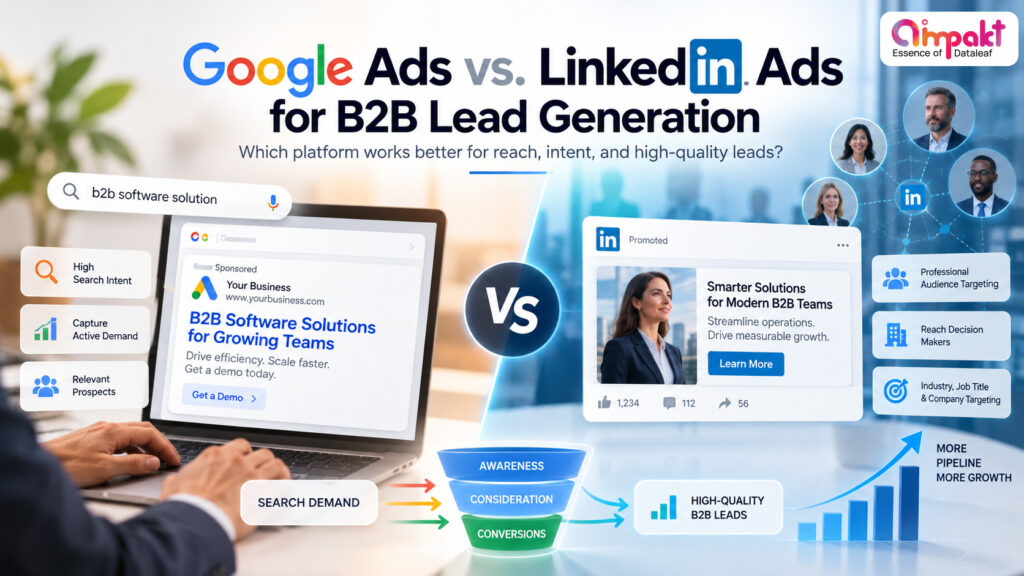
Google Search Ads can capture demand from buyers actively looking for a solution. LinkedIn Ads can reach professionals based on their roles and companies. For B2B lead generation, the better choice depends on buyer intent, audience fit, and the value of a qualified opportunity.
The decision starts with a practical question: do your prospects already know what they need, or do you need to introduce the problem and build interest?
How Does Google Ads Generate B2B Leads?
Google Ads offers several campaign types. For this comparison, Google Search Ads are particularly relevant because they reach people searching for products or services.
Imagine a procurement manager searching for “industrial HVAC contractor” or a business owner looking for “enterprise CRM implementation services.” These searches suggest an existing need, although they do not automatically confirm purchasing authority or readiness.
An effective B2B Search campaign connects a specific query with a relevant offer and landing page. Someone searching for implementation support should see implementation expertise, clear deliverables and a suitable enquiry form.
Search-term reviews and negative keywords help reduce irrelevant traffic. However, niche solutions may have limited search demand, making Search alone insufficient for reaching the full market.
How Does LinkedIn Ads Generate B2B Leads?
LinkedIn Ads supports targeting through professional attributes such as job title, company, industry and seniority. This makes it useful when the audience’s professional identity matters to the sale.
For example, a data analytics consultancy could reach operations leaders in manufacturing companies with a case study about production visibility.
LinkedIn Lead Gen Forms can prefill information from a member’s profile, reducing the effort required to submit an enquiry. A completed form still needs qualification; easy submission does not prove buying intent.
Offers should match the audience’s stage. A useful industry report may attract early interest, while a consultation requires a stronger reason to engage.
Google Ads vs. LinkedIn Ads: Key Differences
| Comparison | Google Search Ads | LinkedIn Ads |
| Main strength | Capturing existing search demand | Reaching defined professional audiences |
| Audience signal | What someone searches for | Professional profile attributes |
| Useful starting offer | Quote, demo, or consultation | Case study, webinar or consultation |
| Main qualification question | Is the searcher a suitable buyer? | Does the professional have an active need? |
Which Platform Delivers Better B2B Leads?
Neither platform guarantees better leads. Evaluate performance using cost per qualified lead, sales acceptance, opportunity creation, and customer acquisition cost.
A lower cost per lead can look attractive while producing enquiries outside your target market. A more expensive campaign may be commercially worthwhile if it generates suitable opportunities.
Connect campaign reporting with CRM outcomes and give leads consistent follow-up. Otherwise, differences in sales handling can distort the comparison.
Should B2B Businesses Use Both Platforms?
A combined approach is worth testing when budget and measurement capacity allow it. LinkedIn can introduce your expertise to relevant professionals, while Google Search can capture related searches as demand develops.
Start with one audience, one offer, and a clear qualification definition. Expand only when results justify the additional investment.
Build a B2B Lead Generation Strategy with AIMPAKT
Choosing between Google Ads and LinkedIn Ads starts with understanding your buyers. AIMPAKT helps you align audience targeting, campaign messaging, and conversion tracking with your business goals.
Want to reach the right decision-makers and generate qualified enquiries? Contact AIMPAKT to discuss your B2B lead generation strategy.